The Basics of Precision Casting
Perman is your reliable partner in the field of precision investment castings and highly values a good client relationship. In good cooperation with you as our customer, we would like to act as a development partner, sharing our thoughts and ideas about product design, material choice, measurements or machining.
All of this is matched exactly to your wishes and demands. Achieving an optimal casting through joint dialogue is our general principle. The degree of co-development is decisive in your project’s success.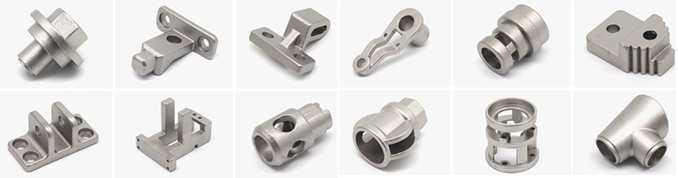
Precision casting, also called investment casting, is a lost wax casting process widely used for producing ferrous and nonferrous metal parts. Unlike other casting processes, precision casting produces net shape parts with excellent surface finish and dimensional accuracy. This manufacturing process is ideal for applications that have relatively low production quantities (100 to 10,000 pieces) or rapidly changing product designs.
With precision casting, we can cast nearly 200 alloys. These metals range from ferrous—stainless steel, tool steel, carbon steel and ductile iron—to non-ferrous—aluminum, copper and brass. When cast in vacuum, super alloys are also available.
Since precision casting uses expendable patterns and ceramic shells, it is excellent for complex and detailed part designs. The process manufactures intricate parts that are difficult, if not impossible, to machine, forge or cast. Examples include internal passages and ports in a valve body, curved vanes of an impeller and internal cooling channels in a turbine blade. The critical barrier in prototype development and short-run production is the time and cost for injection molds. Each precision casting requires one wax pattern, and these patterns are injection molded. As design complexity rises, the tooling often becomes too costly and too time consuming to make prototyping and low-volume production practical.
What is Precision Casting Processes?
Step 1. MOLD DESIGN
Step2. WAX INJECTION
Step 3 . ASSEMBLY TREE
Step 4. SHELL MAKING
Step 5. DEWAX
Step 6. CASTING
Step 7. KNOCKOUT
Step 8. CUT OFF
Step 9. GRINDING
Step 10.INSPECTION AND POST TREATMENT
Step11. FINISHED CASTINGS
Advantages of Precision castings:
- Perfect-Surface Finish
- Closer to Finished Part Designs
- Small Tolerances
- Competitive Tooling Costs
- Less Casting Defects